
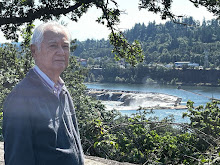
I am dedicating this posting to all my Fellow Residents here at THD and to all my senior readers all over the world who are planning to retire or are in their retirement years.
Retirement, Mattering, and the Quiet Gift of Purpose

I recently finished reading an article in The Wall Street Journal titled “The Retirement Crisis No One Warns You About: Mattering,” by Jennifer Wallace. Long after I folded the paper, one sentence stayed with me:
A sense of purpose plays a central role in retirement satisfaction and mental health.
That line struck a chord deep in my heart, not because it surprised me, but because it named something I had lived through, largely without realizing it at the time.
Much has been written about the financial side of retirement. We are warned to save enough, invest wisely, and plan for healthcare costs. Far less attention is paid to the quieter, more personal crisis: what happens when the world no longer needs you in the same way it once did.
The Invisible Loss After the Farewell Party
When I retired from the U.S. Food and Drug Administration at age 68, I did not feel lost. I felt grateful, accomplished, and ready for the next chapter. Yet I now understand that many retirees experience something different, a sudden erosion of identity, relevance, and belonging.
Work, for all its frustrations, provides structure. It answers an unspoken daily question: Why do I matter today? When that structure disappears, some people feel untethered. They miss the subtle affirmations, the emails, the meetings, the problems only they could solve.
I was fortunate. My retirement did not lead to stillness; it led to reinvention.
Purpose as a Shared Calling
Purpose, for us, was never a solitary pursuit. Long before blogging became my second act, my wife and I found deep meaning in medical mission work in our previous home province of Marinduque, Philippines. From 1999 to 2013, we volunteered our time, energy, and resources to support medical missions that brought basic healthcare to communities with limited access to it.
Those years shaped us profoundly. We witnessed hardship, resilience, gratitude, and grace. In serving others together, we were reminded that purpose is not confined to professional titles or formal roles. It often reveals itself in service, quiet, human, and deeply grounding. Sharing this work with my wife anchored my retirement years in compassion and reinforced a truth I continue to hold close: purpose grows stronger when it is shared.
Building Something That Outlived the Paycheck
After leaving the FDA, my wife and I did something bold: we built a retirement home in the Philippines, Chateau Du Mer Beach Resort and Conference Center. What began as a dream quickly became a living, breathing responsibility. I managed the resort for several years, and in doing so, discovered that purpose does not retire simply because a paycheck ends.
There were guests to welcome, staff to mentor, problems to solve, and a vision to sustain. I was no longer “Team Leader” or “Supervisor,” or " Doctor Katague" but I still mattered to the people who worked with us, to the guests who found rest there, and to myself. Purpose, I learned, is not about titles. It is about usefulness.
Blogging as a Second Act
Then, in 2009, I began blogging.
At first, it was simply a way to organize my thoughts. Over time, it became something more enduring: a conversation with readers around the world, many of whom I will never meet but who nonetheless share this human journey of aging, meaning, and reflection.
Blogging gave me a new rhythm to my days. It sharpened my thinking, connected me to global events, and perhaps most importantly allowed me to give something back: perspective shaped by experience.
In hindsight, I see that blogging gave me what Wallace’s article describes so clearly: mattering. The sense that my words, ideas, and reflections still had a place in the world.
A Different Kind of Wealth
Looking back, I realize that my happiness in retirement has little to do with comfort or geography. It has everything to do with purpose.
Purpose does not have to be grand. It can be tending a garden, mentoring a younger generation, volunteering, creating, or simply bearing witness through storytelling. What matters is the quiet knowledge that your presence still counts.
Retirement, at its best, is not an ending. It is a narrowing of focus away from ambition and toward meaning.
A Closing Reflection
If there is one lesson I would offer to those approaching retirement, it is this: plan not only for how long your money will last, but for how long your sense of purpose will endure.
I am a very happy and contented retiree today not because I stopped working, but because I never stopped mattering to my family, to my community, and to myself.
And that, perhaps, is the retirement crisis we should talk about more and the one we can still choose to avoid.
A Closing Meditation
If you are reading this in the later seasons of life, pause for a moment.
Take stock not of what you no longer do, but of what you still offer. Your years have given you something rare: perspective. Your presence, your listening, your memory, your voice, these are not small things in a world that often rushes past wisdom.
Purpose does not shout. It whispers. It shows up in the way you greet the day, in the care you extend to others, in the stories only you can tell. You do not need to prove your worth; you need only to remember it.
May your remaining years be less about accumulation and more about contribution. Less about urgency and more about meaning. And may you wake each morning knowing that, in ways both seen and unseen, you still matter.
- Awareness: The feeling that your presence is acknowledged and you are not being ignored by your community.
- Importance: The perception that others care about your well-being and take pride in your successes.
- Reliance: The feeling that others depend on you for support, mentorship, or your unique talents.
- Continuers: Use existing professional skills in new volunteer or consulting roles.
- Adventurers: Ditch old routines to pursue entirely new careers or "dream" hobbies.
- Searchers: Explore multiple options (Plan A, B, and C) to find the perfect fit.
- Involved Spectators: Stay connected to their former industry as active observers or news followers.
- Easy Gliders: Savor a freewheeling lifestyle without a fixed agenda, finding joy in daily spontaneity.
- Retreaters: Focus on recharging through intentional reflection or perpetual relaxation.
- Cognitive Health: A strong sense of life purpose is linked to a 28% lower riskof developing cognitive impairment.
- Biological Longevity: Regular volunteering in retirement is associated with slower rates of biological aging and lower levels of systemic inflammation.
- Emotional Resilience: Mattering acts as a buffer against depression, which affects nearly one-third of U.S. retirees due to the sudden loss of workplace routine.
- Say "Yes" Twice a Week: Accept or extend two invitations weekly to signal mutual value between you and your social circle.
- The 3T Pattern: Identify a community need and meet it with your Time, Talent, or Treasure to regain the feeling of being "needed".
- Intergenerational Storytelling: Share family histories or mentor younger people; these "knowledge transfers" create a sense that your stories and impact will live on.
- Identify Your "Ikigai": Use tools like the Boldin Retirement Planner or Hartford Funds Workbook to map out activities that balance what you love, what you are good at, and what the world needs.
- Lastly, my photo of the Day: Feasting on Dungeness crab tonight:


No comments:
Post a Comment