This site is the venue of my collection of special and ordinary Philippine and American dishes. For the last 55 years, My wife, Macrine Nieva Jambalos Katague had been the boss in the Kitchen. However, when she was diagnosed with Parkinson's Disease in 2013, I have to take over her cooking duties. I have been enjoying cooking and this proves that one is never too old to learn new things in life.
Boil the meat in water for 10 minutes until the impurities come out. Remove the floating impurities. Add garlic, onion, tomatoes, salt and pepper. Boil until the meat is tender. Add the taro, cook for 5 minutes. Add the tamarind powder, let it simmer for a minute. Add the okra and long green pepper, cook for 2 minutes. Then add the string beans, cook for 2 minutes. Add the spinach and eggplant. Continue boiling until the vegetables are soft.
Meanwhile, here's the AI Overview
Pork Sinigang, or
sinigang na baboy, is a popular and comforting Filipino soup known for its distinctly sour and savory tamarind-flavored broth. This hearty stew combines tender pieces of pork with a variety of local vegetables and is typically served with steamed white rice.
Key Characteristics
Flavor Profile: The defining feature is its sourness, traditionally derived from young, unripe tamarind (sampaloc), though other souring agents like guava or calamansi can be used in variations. This tartness is balanced with a savory depth from fish sauce (patis).
Ingredients: While the specific vegetables can vary, common additions include taro (gabi) to thicken the broth, daikon radish, long beans (sitaw), okra, and leafy greens like water spinach (kangkong) or spinach. Pork belly or spare ribs are the most common cuts of meat.
Cultural Significance: Often considered a staple comfort food in Filipino households, it is frequently prepared during rainy days or for family gatherings.
Simple Preparation Steps
A basic recipe involves simmering the pork and vegetables in water or broth until tender, then flavoring the mixture. Many cooks use a convenient store-bought tamarind soup base mix, widely available in international grocery aisles, while others prefer to extract flavor from fresh tamarind pulp.
Boil the Pork: In a large pot, simmer pork pieces (ribs or belly are ideal) with water, onion, and tomatoes until the meat is tender, which can take 45-90 minutes. Skim any foam that rises to the surface.
Add Souring Agent & Root Vegetables: Stir in the tamarind soup base/paste/pulp and fish sauce. Add tougher vegetables like taro and daikon radish, and continue to simmer until they soften.
Finish with Greens: Add quicker-cooking vegetables such as long beans, okra, and spinach or water spinach (kangkong). Cook for just a few minutes until they are tender-crisp.
Season and Serve: Taste and adjust seasoning with additional fish sauce or salt if needed. Serve the hot soup immediately with steamed rice on the side.
In my previous postings about ethnic restaurants in Downtown Walnut Creek, I mentioned that there is no Filipino restaurant in WC. But I just learned that Mayday Cravings -an Asian Fusion Snack Bar at Locust St opened recently and is offering several filipino dishes and snacks.
The Beef Kare-kare, Pork adobo, pork Sinigang, and Lugaw are Pinoy Comfort Dishes.
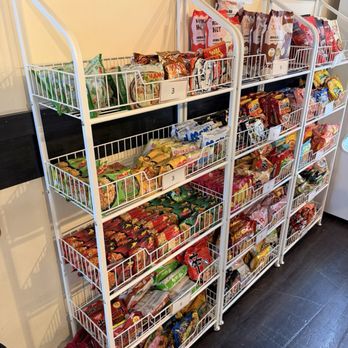
Maymay's Cravings is on Locust Street between the Gather venue and the Dragon's Arch restaurant. The overall atmosphere is simple but clean. In the store, it has both Maymay's Cravings at the front and a Yifangs a little more inwards, so you can get a drink and a snack, all in one. There's ample seating near the entrance and farther in the store are some tables if you do decide to eat some instant noodles.
This store is honestly my go-to when it comes to instant and convenient food. Almost akin to the Japanese and Korean 7/11s. Whenever I walk in, I'm always greeted with a welcome! The instant ramen selections are displayed next to the onigiris and there's a pretty large selection of both! Ranging from jjajamyeon, to classic spicy, and even tteokbokki from what I remember? I was surprised by the variety! It operates just like those ramen bars where you make the ramen on these machines. You can ask for toppings for your ramen at the register, which is always a plus! I personally haven't tried them, but i've always wanted to. They sell some drinks to be made but if you don't have much time, they also sell some drinks beside the counter if you need something really quick.
The service is very nice. I believe it's a family owned business? Both the owner and the girl operating the business are incredibly nice, going above and beyond in helping the customer and you can tell they work hard. Definitely come by if you're looking for a quick bite before work or during a lunch break!
Here are some Reviews:
1.We tried various inigiri varieties💚: tuna & crab. Both were excellent. The portions of crab and tuna were generous and the price is right. There's easy parking across the street at the Locust garage.
💚
2. Cute Asian snack spot that opened next to Yifang, replacing the previous ever-abandoned kettle corn business. Maymay's main thing is dressed-up instant ramen, but they also sell onigiri, pudding, boba, and other light bites.
3. Minimal decor, very local vibe. Friendly staff and simple offerings. We got one of their creamy lobster ramens to share, topped with fish ball, egg, and crab stick. Their boiling stations are self-serve-- pretty easy to operate. Overall, the ramen itself is fine. I appreciate the variety. The toppings are good. Nothing you can't find at 99 Ranch. I will note that their onigiris are delicious and more generous with the fillings than other spots in the bay.
I love the concept but the price, whewww :') I get that I'm paying for the convenience, but $3-9 for a pack of ramen then $1+ for each topping? I gotta be in some elevated level of laziness to justify it (spoiler: 60% of the time, I am)
4. We've been wanting to stop by here and finally got to try this place. It did not disappoint! It is located on Locust Street, and it shares the building with Yi Fang. The staff is very friendly, and it looks like the same owner runs both businesses. Parking can be tricky in the area, but there are several parking lots nearby.
We didn't try Yi Fang but we ordered a few things from MayMay. -First, the Onigiri was delicious! 5/5. It reminded me of 7/11 onigiri in Japan. It has the right amount of meat and rice. I had the spicy tuna one and it was good.
-I also ordered the Buko Pandan dessert 4/5. This was surprisingly a very delicious dessert. It comes in a medium-sized cup, suitable for eating with a spoon, like a dessert, but it feels more like it should be in a regular boba drink cup. It comes with jelly but it is runny like a drink. It is sweet and it tastes like coconut. If you don't like too sweet beverages make sure you ask to change the sugar level. Regular is too sweet.
-My husband ordered the Taho 2/5 and this was our least favorite. First it is cold. It also comes with some crystal-type pearls, but being cold was not something we were expecting. The tofu is also a bit hard and it is not sweet. This was something we wouldn't order again.
The cafe also offers instant ramen and various toppings to add to it. Overall, this place is fun, offering a good variety of items. I only got to try one Onigiri but I want to try others.
My Photo of the Day-Dinah at Tanoshi- 12/23/25
You can order via DoorDash. It is in my plan to order their pork sinigang rice bowl in the near future.
Here's the top Five News of the Day
1.China launches record military drills around Taiwan
China has begun its biggest live-fire exercises yet around Taiwan, involving land, sea, air and rocket forces and simulating encirclement tactics —
a major escalation in cross-Taiwan Strait tensions amid ongoing geopolitical friction.Reuters+1
2. Dangerous winter storm hits U.S., causing widespread power outages A powerful post-holiday storm has knocked out power to hundreds of thousands and may “bomb out” over the Great Lakes — threatening travel disruptions during the busy holiday season. FOX Weather
3. Jan. 6 pipe bomber confesses he didn’t target Electoral College vote count A man charged with placing pipe bombs near the DNC and RNC before the January 6 insurrection told investigators he wasn’t aiming at Congress’ certification session, according to the DOJ. ABC News
4. Ukraine peace talks and global security dynamics headline world diplomacy Discussions between President Trump and Ukrainian President Zelenskyy are ongoing, focusing on longer-term U.S. security guarantees, while broader geopolitical issues including China-Taiwan tensions feature prominently in global briefings. Financial Times
5. Former heavyweight champ Anthony Joshua injured in serious crash Former world champion boxer Anthony Joshua was hurt in a car accident in Nigeria that killed two people; his injuries are reported as minor
The Many Flavors of the Philippines: A Journey Through Regional Filipino Cuisine
For years, I’ve written about Filipino food as the heart of our culture, how meals bring families together, how celebrations revolve around shared dishes, and how food becomes a symbol of memory and identity. But one thing I’ve never explored in depth is the extraordinary diversity of Filipino cuisine across our archipelago.
With more than 7,000 islands and seven major regions, the Philippines is really a tapestry of regional food traditions shaped by geography, history, climate, and local ingredients. From the earthy and simple dishes of the north to the coconut-rich, chili-infused fare of the Bicol region, our culinary map is as varied as our languages.
Today, let me take you on a tour of these major variations, an overview of what makes each region’s cuisine distinctive and meaningful.
1. Ilocano Cuisine (Northern Luzon): Simple, Savory, and Earthy
Ilocano food is known for its simplicity and practicality. The harsh climate and rocky terrain of the north taught Ilocanos to rely on what’s available, vegetables, preserved meats, and local greens.
Key characteristics:
Salty and savory flavors, especially through bagoong (fermented fish paste)
Heavy use of leafy vegetables: saluyot, malunggay, kangkong
Dishes that highlight resourcefulness and minimalism
Ilocano cuisine is humble but deeply satisfying, comfort food for many of us who grew up in the north.
2. Pangasinense & Central Luzon Cuisine: Abundance of Seafood and Grilled Meats
Moving south, Pangasinan, known for its salt beds, leans heavily on seafood and salted products, while Pampanga in Central Luzon is often called the Culinary Capital of the Philippines.
The Visayas, lying at the center of the archipelago, offers a spectrum of flavors.
A. Ilonggo Cuisine (Western Visayas) – The New “City of Gastronomy”
Iloilo was honored last year as a City of Gastronomy, and rightly so. Ilonggo cuisine is known for gentle sweetness, fresh seafood, and complex broths.
Mindanao’s food culture deserves far more recognition for its depth and complexity.
7. The Cordillera & Mountain Provinces: Indigenous Strength and Tradition
Though smaller in population, the Cordillera region has a unique culinary identity built on tradition and sustainability.
Key characteristics:
Use of root crops, grains, and smoked meats
Minimal seasoning, letting natural flavors shine
Ritual and rice-based dishes (tapey, etag, pinikpikan)
This cuisine is a window into pre-colonial Filipino life.
A Final Reflection
As someone who has tasted, cooked, and written about Filipino cuisine for decades, I continue to marvel at how our food tells the story of our people. Each region offers a distinct flavor profile, yet they all share a common spirit, hospitality, resilience, and the joy of gathering around the table.
Filipino food is not just one thing. It is many things, woven together like the islands themselves. And that is what makes our culinary heritage truly special.
Meanwhie here's the AI Overview on the Diversity of Filipino Cuisine
The Philippines boasts a vibrant, diverse cuisine shaped by indigenous ingredients, Malay, Chinese, Spanish, and American influences, offering a journey through regional flavors from savory Ilocos (like Pinakbet & garlic-heavy dishes) to tropical Davao, featuring staples like sour Sinigang, soy-vinegar braised Adobo, crispy Lechon, and street foods like Empanada, all blending sweet, sour, salty, and savory notes in a unique culinary tapestry celebrated in cookbooks and food tours.
Key Regional Flavors
Ilocos (North Luzon): Known for bold, savory, and sometimes garlicky food, using local produce and vinegar. Must-tries include garlic-rich Bagnet, vegetable stew Pinakbet, and crispy, orange-hued Ilocos Empanada.
Bicol (Bicol Region): Famous for its use of coconut milk and chili, creating spicy, creamy dishes like Laing (taro leaves in coconut milk).
Cebu (Visayas): Renowned for its grilled seafood (sutukil: Sugba/Grill, Tuwa/Soup, Kilaw/Ceviche), hanging rice (Puso), and rich Lechon.
Mindanao (Southern Philippines): Features unique dishes like spicy curries, fresh seafood (king tilapia, giant crabs), and influences from diverse ethnic groups, often overlooked but incredibly flavorful.
Iconic Dishes & Influences
Adobo: A cornerstone dish of meat (chicken/pork) braised in vinegar, soy sauce, garlic, bay leaves, and peppercorns, reflecting Spanish "adobar" (marinade).
Sinigang: A tangy, sour soup using tamarind or other souring agents, a comforting taste of home for many Filipinos.
Lumpia & Pancit: Chinese influences are clear in these popular spring rolls and various noodle dishes.
Kinilaw: The Filipino version of ceviche, using vinegar, calamansi (native citrus), and fresh seafood.
Street Food: A vibrant scene with skewered meats, fried delights, and unique items like Balut (fertilized duck egg).
Cultural Context Filipino cuisine is a fusion of indigenous techniques with Malay, Chinese, Spanish (adobo, stews), and American (fried chicken, hot dogs) influences, creating a balance of sweet, sour, salty, and savory without being overly spicy. It's a cuisine rooted in family, fiestas, and abundant fresh ingredients from the archipelago's vast waters and fertile lands, celebrated through generations and in modern culinary explorations.
Just IN:
Filipino food is climbing the world rankings. In the TasteAtlas Awards 2025/2026, the Philippines secured the 25th spot among the world’s best cuisines, a major leap that reflects growing global love for dishes like sinigang, inasal, lumpiang shanghai, lechon, leche flan and Adobo.
This is one of my favorite delicacy from Marinduque-my Second Home
The term "igod" (or sometimes spelled as "igot") is the local name used in the province of Marinduque, Philippines, for the coconut crab (Birgus latro). In other parts of the Philippines, such as Batanes and the Caluya Islands, it is known as "tatus".
Another one of my favorites from the province of my Birth-Iloilo are the fresh water river eels.
The Anguillidae are a family of ray-finned fish that contains the freshwater eels. All the extantspecies and six subspecies in this family are in the genus Anguilla, and are elongated fish of snake-like bodies, with long dorsal, caudal and anal fins forming a continuous fringe. They are catadromous, spending their adult lives in freshwater, but migrating to the ocean to spawn.
Eels are an important food fish and some species are now farm-raised, but not bred in captivity. Many populations in the wild are now threatened, and Seafood Watch recommend consumers avoid eating anguillid eels.