
David B. Katague is an online memoirist and cultural essayist whose writing has appeared on HubPages

Thursday, February 26, 2015

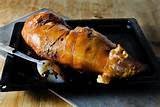
A Simple Recipe for Oven Roasted Suckling Pig-Lechon sa Kawali

The other day during our weekly outing of dining and slot machine playing, my wife and I decided to eat in the Buffet Restaurant of TVC, Lincoln, CA-our favorite Indian Casino. Of the hundreds of dishes ( Chinese, Mexican, Italian, traditional American), the highlight of the buffet that day was an oven roasted suckling pig. It was delicious and the skin was crispy and meat juicy. The problem was we can not find any liver sauce. This reminded me of our Pinoy, Lechon sa Kawali ( Roast Pig in a Pan). I searched for recipes in the Internet. There were several but the following published in the Food Lab I found very simple and easy to follow. Try it and let me know.


Whole Roasted Suckling Pig

Yield: Serves 12 to 16
Active time: 1 hour
Total time: 5 to 6 hours
This recipe appears in: The Food Lab Redux: 7 Pork Dishes for the Holidays The Food Lab: How to Roast a Whole Suckling Pig
Ingredients

1 whole suckling pig, about 20 pounds (see note)
Kosher salt and freshly ground black pepper
20 whole cloves garlic
1 six-inch piece of fresh ginger, cut into 1/2-inch slivers

Procedures

1 Preheat oven to 300°F. Season pig inside and out with plenty of salt and pepper. Fill cavity with garlic and ginger. If pig fits on a single rimmed baking sheet or roasting pan, place him on the baking sheet back-up and transfer to the oven. If pig is too large, remove a rack from the oven and place on your range. Overlap two rimmed backin sheets so that they fit on the oven rack and line the whole thing with foil. Transfer the pig to the overlapped baking sheets then lift the whole oven rack and return to the oven so that the pig is in the center.

2 Roast until an instand read thermometer inserted into the deepest part of the shoulder blade registers at least 160°F, about 4 hours. If ears or tail begin to burn, cover with foil and continue roasting.

3 Increase oven temperature to 500°F and cook until skin is crisp all over, about 30 minutes longer. Remove pig from oven, tent with foil, and allow to rest for 30 minutes. Serve by tearing skin into serving-sized pieces and removing flesh with your fingers and piling it onto a serving platter.

Note: You can order suckling pigs from your local butcher, or from online resources such as McReynolds Farms. Plan on a pound and a half of weight per person. You can feel free to substitute the garlic and ginger with any aromatics of your choice such as herbs, other vegetables, or fruit. Your pig can be removed from the oven and left at room temperature tented with foil for up to two hours after step two and before proceeding with step three if you need to do so for timing purposes.

About the author: J. Kenji Lopez-Alt is the Chief Creative Officer of Serious Eats where he likes to explore the science of home cooking in his weekly column The Food Lab. You can follow him at @thefoodlab on Twitter, or at The Food Lab on Facebook.

Wednesday, February 18, 2015

My Favorite Pinoy Menudo Recipe


The other day, my daughter came home to visit and brought a menudo dish that was cooked by her fellow office mate who has also Filipino ancestry.

I love the dish because it was a little spicy. I have never cooked menudo before so I did some Internet search. There are several menudo recipes in the web, but here's a video of a recipe that I found easy to follow. Since my wife and I I do not care for hot dogs, the one that I cooked did not have hot dogs. To make it spicy I added a dash of Tabasco hot sauce.

Saturday, February 7, 2015

Salmon Fish Head Soup for Dinner Last Night

Last night we have salmon fish head soup with boktoy and green beans based in tamarind sauce. Thus I reposting the following recipe i wrote about one year ago. yum, yum, yum!

When I saw the salmon fish heads yesterday at the grocery store, I changed the menu for our dinner instantly. I was planning on purchasing 2 rib eye steaks to broil, but the temptation for fish head soup was just so great, I forgot about the rib eye steak. I paid only six dollars for two large salmon fish heads instead of $18 dollars for two pieces of rib eye steaks.

Fish head soup ( sinigang) is a delicacy in the Philippines and one of the most common dishes in an oriental family's diet. My favorite fish head soup besides salmon is the head of bingao, an big ocean fish that belongs to the snapper specie However, to most non-oriental fish head soup is not for human consumption and just looking at the fish head disgust them. My four US born children and six grand children do not eat fish head soup, but they love salmon steaks or red snapper fillet. Of course they love Fish and Chips.

When I was growing up in the Philippines the fish head was always reserved for the head of the family(my DAD) or for the guest of honor at dinner time. The other parts of the fish are for other members of the family. I have a very simple recipe for salmon head fish soup which contained a lot of vegetables( green beans, baby bokchoy, tomatoes, radishes and eggplant)and of course flavored with tamarind cubes.

Here's my recipe. If other vegetables are not available in your area, baby bokchoy, radishes and green beans must be a must if you want your soup to taste good! The following recipe will serve from 6 to 8 adults with other dishes in the dinner table.

2 pcs salmon fish heads (red snapper or other big ocean fish heads may be used)
1.5 liters of water
1 medium onions (quartered)
2 tbsp of ginger slices
2 pcs of medium tomatoes (quartered)
6 pcs string beans (cut 3 inches approx)
6 bunches of baby bokchoy( Kangkong is used in the Philippines)
2 small raddish (sliced)
2 pcs of egg plant (sliced)
1 pck of sinigang mix (Tamarind based) (for 1.5 liter mix)


In a large sauce pan, boil water and onions & ginger then add fish and cooked for approx 5-10 minutes. Add the rest of the ingredients( slice the vegetables evenly) except for the bokchoy and cooked for about 2-3 minutes and serve hot. Add the baby bokchoy last. Shut off the heat and let the pan simmer. Do not over cook veggies.

Fish heads contain a lot of omega 3 fatty acids and fish oil that promote brain development according to a recent report on nutrition and health. There are some studies that shows that if a pregnant women eat fish (which means lots of omega3 fatty acids or fish oil on her diet) her babies will have higher IQs and fewer learning disorders, and were less likely to develop mental retardation or cognitive delays.

As for me even if I can not get pregnant, I will eat fish as often as I can, since I love fish and I know it is good for my health and in my aging years. For those of you who hate fish, especially fish heads, I feel sorry for you since you are missing one of the most nutritious and delicious dish easily available all over the world.

Saturday, January 31, 2015

Mini Chicken Pot Pie by Lina


by Lina Espanola Jimenez-Guest Writer.

I was reading my FB page the other day. The mini pot pie of a fellow Barotacnon attracted my attention. I requested for the recipe and here it is. Enjoy and have fun!

Ingredients:

Vegetable cooking spray
11/2 cup cubed cooked chicken
1 can ( 10 3/4 oz.) Campbell's cream of chicken Soup
1/2 of 16 oz. package frozen mixed vegetables, thawed ( about 1 1/2 cup)
All purpose flour
1 package (12 oz.) refrigerated biscuit ( 10 biscuit).
1/2 cup shredded cheddar cheese

Directions:

1. Heat oven to 350 degrees F . Spray muffin pan cups with cooking spray. Stir chicken soup and vegetables in a medium bowl.

2. Sprinkle flour on work surface. Roll or pat biscuit to flatten slightly. Press into the bottom and up the sides of muffin cups. Spoon about 1/3 cup chicken mixture into each biscuit cup. Lightly press chicken mixture so it's level. Top each with about 2 tsp. cheese.

3. Bake for 15 min. Or until biscuits are golden brown and cheese is melted. Let pot pies cool in the pan on a wire rack for 5 min.

Note: I used the Grand biscuits and used 3 1/2 size muffin pans . I love cheese so I pile it up with cheddar cheese. Enjoy!

About Lina Espanola Jiminez: She retired from medical practice a few years ago, and now devote herself to gardening and experimenting with food.

Thursday, January 1, 2015

What to Eat and not to Eat on New Years Day in the Philippines

Twelve kinds of round fruits should be in your table by midnight to bring good luck and prosperity to the Household

When I was growing up in the Philippines, my parents will tell us kids that on New Years Eve and Day, we should do the following for good luck. Doing these things will help insure that the coming year will be a happy and prosperous one. Many of these traditions and superstitions are of Chinese influence, I believe.

1. Turn on all lights so that the coming year will be bright.

2. Make as much noise as you can to scare away evil spirits.

3. Debts must be paid off. Fill you wallet with fresh peso bills.

4. Open all doors, windows, cabinets and drawers to let good fortune in.

5. Scatter coins around the house, on tabletops.... inside drawers...

6. Clean everything including your body by taking a long bath, the closets and the whole house.

7. Wear polka-dots, preferably black and white. Anything round signifies prosperity.

8. Jump twelve times at midnight to increase your height. (Observed by Filipino children.)

There are five things related to food that we must do for good luck as follows:

1. Prepare 12 round fruits, one for each month of the coming new year ( see photo above).

2. Have a very round grape in your mouth at the stroke of midnight.

3. Eat a native delicacy made from sticky rice to make good fortune stick in the new year.

4. Eat long noodles (pancit) for long life ( definitely of Chinese origin). We should eat pancit also during our birthday.

5. Don't eat any chicken or fish. They are associated with the scarcity of food.

Then on New Years Day we should not clean anything, otherwise we might sweep away the good fortune. In addition we should not spend money at all. Our being thrifty that day will help us manage our money very well for the whole year. Do you have any New Years Eve tradition in your family? Please share!

Happy 2015 to All of You, my dear readers and FaceBook Friends!

Wednesday, December 3, 2014

Three Recipes that are Easy and Simple

Chicken Adobo Sa Gata (Coconut Milk)

Now that the Dungeness crabs are in season and selling from $4.99 to $ 6.99 per lb, it is time to feast on this delicious seafood.

The following are three simple recipes that Merlet Perlas and my sister-in-law gave me during their last visit to my wife several months ago. At that time they brought with them two whole Dungeness Crabs. They also brought with them two other dishes, the chicken adobo sa gata and the Chicken Quesadilla dish. The recipe of the three dishes are as follows:

A.Dungeness Crabs in Oyster Sauce

1.Divide and Cracked whole steamed Dungeness Crabs into small portions. Save the Butter.

2.In a separate pan saute ginger, and garlic with vegetable or olive oil.

3.Place the cracked crabs into the pan, stir until it simmers.

4.Add the crab butter with enough water to transfer all the butter into the pan

5.Add 2 tbs of oyster sauce, then the scallions.

6.Continue stirring until it simmers. Serve Hot.

B. Chicken Adobo sa Gata

1. Chopped the whole chicken into small edible portions. Take out most of the skins and wash the meat

2. Saute garlic and onion in vegetable or olive oil in a pot. Put the chicken in the pot, stir and mix. Add a tsp of powdered black pepper. Boil the chicken for 10 minutes or until cooked without adding any water. Add about one tsp of tumeric powder* ( dilaw or yellow in Pilipino) and simmer another 10 minutes.

3. Add 1 can of coconut milk and simmer until the dish turn yellow. Then add ½ cup of vinegar, and mix. Add slices of green and red bell peppers, salt and pepper to taste. Serve Hot. Total time should be around 30 minutes.
* If you are rich, used safron instead of tumeric

C. Chicken Quesadilla ( Excellent for Left over Baked Chicken)

1. Shred the left over chicken. Place the chicken in a tortilla flour. Add Cheddar Cheese.( Any kind of cheese will do).

2.Close and flip the tortilla. Place in a hot skillet ( no oil). Invert tortilla and cook until the cheese melts. Add your favorite salsa( mild or hot) and sour cream. Bon Apetit!

Friday, November 28, 2014

Katague Recipe for Chicken Macaroni Salad


At our last year and this year Thanksgiving dinner in Walnut Creek at my son's residence (and every party in the David B Katague household), my wife and with my assistance prepared Chicken Macaroni salad. The recipe is a favorite of my four adult children and six grand children who all grew up here in the US. There are several Chicken Macaroni salad recipes that I know, but this version is the simplest one and my favorite.

2 cups elbow macaroni small, cooked
1 lb boneless chicken breast, boiled and cubed
1 ½ cup pineapple chunks or slices and chopped
1/2 cup Spanish, sweet onion ( Vidalia or equivalent), minced
1/2 cup raisins( optional)(sweetened and dried cranberries may be used)
3 hard boiled eggs, chopped( optional)
2 cups mayonnaise (can be 1 cup mayo and 1 cup miracle whip)
1 cup Cheddar cheese, cubed (optional)
2 teaspoon salt
1 teaspoon pepper
2 red delicious apples chopped into small cubes
1/4 cup sweet relish

Cooking Preparation:

Cook the macaroni as directed in the package. Place the macaroni in a large container. Add the mayonnaise (and /or miracle whip) and mix well. Put in the minced onions and mix well. Place the cheddar cheese(optional) in and mix again

Now, add the cooked chicken breast and distribute evenly. Put-in the pineapple chunks or slices, boiled eggs(optional), and and apples (raisins optional) and mix well. Add the sweet relish and salt and pepper to taste. Chill inside the refrigerator for about an hour. Serve chilled.

Note: The popular Pinoy recipe has raisins but no apples. I love raisins, but my wife hates it. So in this recipe, I listed raisins as optional. Apples in the Philippines is very expensive. Another option that I enjoy is to use sweetened dried cranberries instead of raisins. Here in the US, the dried and sweetened cranberries are more expensive than the raisins.
Related Posts Plugin for WordPress, Blogger...